A new federally funded study examining the possible risks of organ donation by marijuana users found no indication that recent cannabis use increases the likelihood of significant side effects in the year immediately after a transplant—even as many healthcare providers continue to restrict transplants to cannabis consumers.
Findings of the research, which looked at rates of infections, transplant failures and deaths among recipients, “suggest that organs from donors with a history of recent marijuana use do not pose significant infectious risks in the early posttransplant period.”
“Despite concern that donor exposure to marijuana increases the risk of fungal infection in recipients, our study found that a donor history of marijuana use did not increase (1) the likelihood of donor culture positivity (including respiratory cultures), or (2) the risk of early recipient bacterial or fungal infection, graft failure, or death posttransplant,” authors wrote. “Even when evaluating only lung recipients, there remained no association between donor marijuana use and the risk of posttransplant infection.”
As more states have legalized marijuana, reported rates of use among adults have also risen, notes the new study, published late last month in the American Journal of Transplantation. “It is likely that a growing proportion of deceased organ donors have a history of marijuana use, as well,” it says, “though this metric has not been specifically reported.”
“Our data suggest that organs from donors with a history of recent marijuana use do not pose significant infectious risks in the early posttransplant period.”
Infections are a main concern, it continues, pointing to past findings that marijuana leaves themselves can be contaminated with potentially dangerous bacteria and fungi. Inhaled marijuana has been associated with certain infections among transplant recipients, while bacterial outbreaks have also been linked to marijuana use among the non-transplant population.
What has been less clear is whether organs from marijuana users could pose risks to transplant recipients.
“Whether a deceased organ donor with a history of marijuana use posses risk to the SOT [solid organ transplant] recipient has not been clearly evaluated,” the paper says, and “no studies have determined the impact of SOT donor marijuana use on donor culture results and risk for donor-derived infection (DDI) among recipients.”
“The goal of our study,” authors wrote, “is to better characterize the infection risks that marijuana use among deceased organ donors may pose to SOT recipients.”
Conducted by researchers at the University of Pennsylvania, University of California San Francisco, Temple University and the Gift of Life Donor Program, the study looked at data from three transplant centers in Philadelphia. It included transplants between January 1, 2015 and June 30, 2016 involving organs procured by the Gift of Life program. The research was funded by the National Institutes of Health, Centers for Disease Control and Prevention and Transplant Foundation’s Innovative Research Grant Program.
Transplants were defined as coming from a recent marijuana user either if a toxicology screening showed the presence of THC or if next-of-kin or a donor informant reported the donor had a history of cannabis use within the past 12 months.
Analyzing data from hundreds of organ transplants, researchers assessed three primary outcomes: whether cultures from donors themselves tested positive for bacterial or fungal infection, whether organ recipients developed new bacterial or invasive fungal infections and whether the transplant resulted in either graft failure or the recipient’s death. For each outcome, they found no significant increase in risk involving donors with a history of recent cannabis use.
“Among donors with a history of recent marijuana use, 79 (89%) had at least 1 positive culture, compared to 264 (87%) among those with no history of marijuana use,” it says, for example. “On donor respiratory cultures, 76 (85%) donors with a history of recent marijuana use and 250 (82%) donors with no history of recent marijuana use had bacterial or fungal growth on respiratory cultures. On both unadjusted analyses and multivariable analyses, there was no association between recent donor marijuana use and donor culture positivity.”
Notably, the study did not account for the amount or duration of marijuana use by donors. It also had a smaller cohort of lung transplant recipients than past studies, which authors note “have shown mixed results.”
The report acknowledges that relying on interviews with next-of-kin or donor informants was “an imperfect measure” of a donor’s actual cannabis use, though they added that “when we limited the exposed group to those with a positive toxicology screen for THC, there remained no association with donor culture results or recipient outcomes.”
“In conclusion,” they wrote, “our study demonstrates that donors with a history of recent marijuana use are not more likely to have positive donor cultures, and their recipients are not more likely to develop a bacterial or fungal infection, graft failure, or death in the early posttransplant period (in the context of current management). These results suggest that organs from donors with a history of recent marijuana use do not pose significant novel infectious risks to recipients in the early posttransplant period.”
Current guidance around cannabis use and organ donation is inconsistent, as noted in a recent review by a student fellow at the Petrie-Flom Center at Harvard Law School. The U.S. Organ Procurement and Network defers decisions on transplant eligibility to each transplant center, it says, though in practice many marijuana users are deemed ineligible.
“Many transplant centers prevent cannabis users from receiving solid organ transplantation due to concerns regarding interactions between cannabis and immunosuppressant drugs used for transplants, treatment non-adherence, fungal infections, and neuropsychiatric effects,” the review says.
But the latest study is among a growing body of work pushing back against that policy. “Although larger-scale studies are needed to validate these findings, these studies suggest that medical cannabis use should not be an absolute contraindication to solid organ transplantation,” the Harvard post says. “Research has also suggested that THC, a component of cannabis, might actually help to prevent transplant rejection.”
As for actually identifying recent cannabis use, at least two recent developments are expected to allow researchers to test subjects with more precision. Researchers behind a federally funded study recently said they’ve developed new procedures to enhance the selectivity of a popular forensic testing method, allowing better detection of delta-9 THC and its metabolites in blood.
The federal government also funded separate recently published research identifying a promising new method to test for recent marijuana use. That study, funded in part by the National Institute on Drug Abuse (NIDA), determined that more accurate method of testing than currently used is by analyzing the molar metabolite ratio of THC to THC-COOH in the blood.
The research is part of a growing call for more precise and reliable ways to measure recent marijuana use and impairment—often around driving—as more jurisdictions legalize the drug.
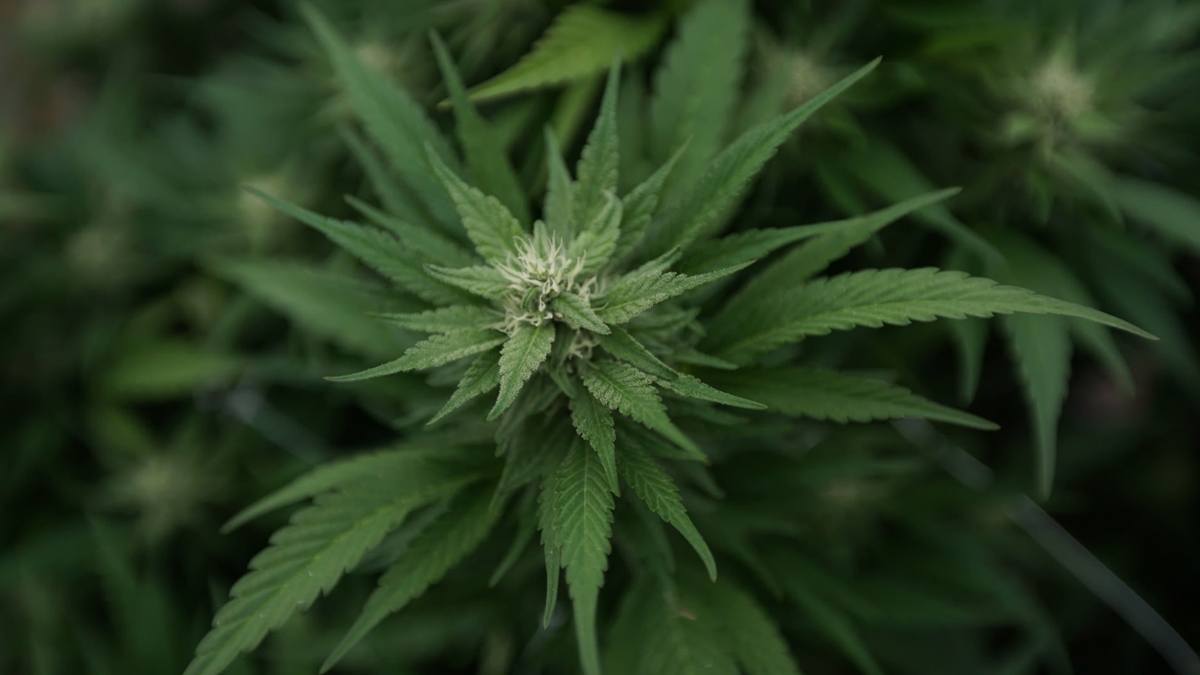
Photo courtesy of Mike Latimer.
Ben Adlin via (https://www.marijuanamoment.net/organ-donations-from-marijuana-users-pose-no-significant-infectious-risks-study-finds/)
Keep out of reach of children. For use only by adults 21 years of age and older.